

Our Heritage Must Feed Those Who Keep It Alive: Rethinking the Future of Northern Nigeria’s Traditional Crafts
By Ibrahim Hassan Hassan
In response to Gladys Asuquo’s “Beyond Preservation: Can Northern Nigeria’s Traditional Crafts Survive Without a Livelihood?”
There is something deeply unsettling about watching a tradition that has survived centuries struggle to survive another generation, not because its cultural value has diminished, but because the people who understand it can no longer make a decent living from practising it.
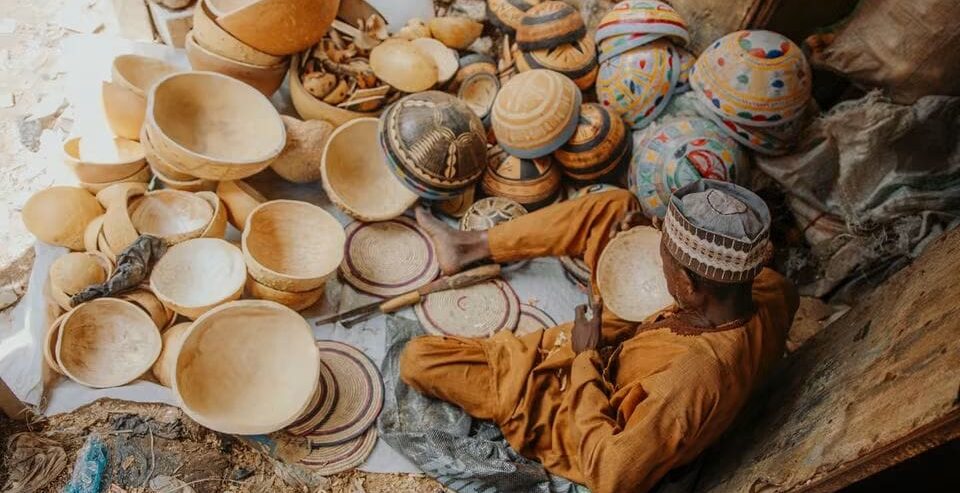
I have always found that some of Northern Nigeria’s most compelling stories are told quietly. They are found in the hands of an old leatherworker carefully shaping a piece of hide, in the patience of an embroiderer working patterns into a traditional garment, in the indigo-stained fingers of a dyer at Kofar Mata, and in the workshops where knowledge is transferred not through textbooks but through years of watching, practising and making mistakes.
These are not simply occupations. They are living archives of our history, ingenuity and collective memory.
Gladys Asuquo’s article, Beyond Preservation: Can Northern Nigeria’s Traditional Crafts Survive Without a Livelihood?, raises an important question that deserves more than another round of conversations about the beauty of our cultural heritage. It asks us to confront an uncomfortable reality: we cannot continue to celebrate the products of traditional craftsmanship while ignoring the economic difficulties of the people who produce them.
An artisan cannot pay school fees with cultural appreciation. A leatherworker cannot sustain a household with nostalgia. And a young apprentice cannot be expected to dedicate years to mastering a craft if the eventual reward offers little more than the struggle to make ends meet.
This is where our conversations about cultural preservation must become more practical.
The people behind the heritage
Whenever I think about Kano’s traditional industries, I am reminded that much of what makes the city culturally distinctive is sustained by ordinary people whose names rarely appear in official accounts of its history.
Take the Kofar Mata dye pits, established in 1498. For centuries, generations of dyers have maintained a remarkable knowledge of indigo dyeing, understanding the materials, the preparation of the dye, the timing and the patience required to produce the deep shades associated with the craft.
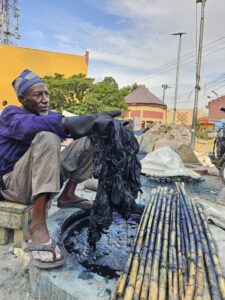
Yet, when we visit places like Kofar Mata, how often do we pause to consider the economic realities of the people working there? How many of us ask what it costs to maintain the practice, how difficult it is to find customers, or whether the younger members of these families are interested in continuing the trade?
It is easy to photograph the blue fabrics, admire the process and describe the dye pits as a treasure of Kano’s heritage. It is much harder to confront the conditions under which the people responsible for keeping that heritage alive must work.
And this contradiction extends beyond dyeing.
Across Kano and other parts of Northern Nigeria, traditional leatherworkers, weavers, embroiderers, potters and metalworkers possess skills that are difficult to acquire and impossible to replace overnight. Their knowledge has been built through years of practice, observation and intergenerational exchange.
But the economic environment surrounding these crafts is changing. Imported alternatives, mass production, rising material costs and shifting consumer preferences are creating pressures that cannot be addressed by cultural admiration alone.
We must be careful not to romanticise the hardship of artisans simply because their work is traditional.
Preservation must become an economic conversation
One of the strongest points in Asuquo’s argument is that preservation must go beyond celebration. I would take this further: cultural preservation must become part of our economic development conversation.
We have spent considerable time discussing the need to protect indigenous knowledge, celebrate our heritage and encourage young people to embrace their identities. These conversations are necessary, but they remain incomplete when the people expected to sustain these traditions are left without viable economic opportunities.
There is a reason young people are gradually moving away from some traditional occupations. It is not always because they have lost interest in their culture. Sometimes, they simply cannot afford to build their future around an occupation that offers uncertain returns.
We should understand this distinction.
A young person who chooses a different career because traditional craftsmanship cannot provide a dependable livelihood is not necessarily abandoning their heritage. They may simply be responding to the economic realities around them.
Rather than appealing to young people to return to traditional crafts through sentimental arguments, we should make these industries attractive enough for them to consider.
That means connecting apprenticeship to entrepreneurship, craftsmanship to contemporary markets, and traditional knowledge to opportunities within the wider creative economy.
An opportunity for the cultural and creative sectors
I believe there is an important opportunity for partnerships between traditional artisans and practitioners across Nigeria’s cultural and creative industries.
Our fashion designers, photographers, filmmakers, visual artists, writers, architects, cultural researchers, curators, digital storytellers and creative entrepreneurs have a role to play in this conversation.
Imagine what could happen if contemporary Northern Nigerian fashion designers worked more deliberately with Kofar Mata dyers to develop collections that introduce traditional indigo fabrics to new markets. Imagine leatherworkers collaborating with emerging designers to produce contemporary footwear, bags and accessories while retaining indigenous techniques. Imagine filmmakers documenting the lives and knowledge of ageing artisans, while photographers and writers create compelling narratives that help audiences understand the human stories behind their products.
These should not be occasional collaborations undertaken for exhibition purposes. They should become sustainable relationships that create markets, generate income and give artisans greater visibility.
Our cultural festivals, literary platforms, exhibitions, creative hubs and tourism programmes should also become spaces where traditional crafts are not merely displayed but commercially connected to audiences and potential buyers.
There is an opportunity to build a stronger relationship between heritage and contemporary creativity without stripping traditional crafts of their identity.
The objective should not be to modernise everything until it becomes unrecognisable. It should be to create room for traditional knowledge to find relevance in contemporary life.
Government must move from recognition to partnership
However, the creative sector cannot shoulder this responsibility alone. Government institutions must become active partners in the survival and development of these industries.
Relevant ministries and agencies responsible for culture, tourism, commerce, trade, industry, education and youth development need to see traditional craftsmanship as more than a cultural subject. It is also a source of employment, enterprise development, tourism potential and local economic activity.
In Kano, for instance, there is considerable room for a more coordinated intervention involving the state government, cultural institutions, local artisans’ associations, educational institutions and private-sector investors.
This could include accessible financing for traditional craft businesses, improved production facilities, structured apprenticeship schemes, support for the procurement of raw materials, dedicated craft markets and platforms that connect local producers to national and international buyers.
Government can also commission cultural documentation projects, support the participation of artisans in trade fairs and international exhibitions, and facilitate partnerships between traditional craft communities and contemporary creative businesses.
Our universities and technical institutions should be encouraged to document indigenous production methods and develop programmes that bring traditional practitioners into learning environments. This would allow knowledge to move in both directions: from experienced artisans to younger learners, and from contemporary research and design practices back into traditional industries.
There is also a need for private-sector investment and development partnerships. Cultural organisations, foundations, diplomatic missions and international heritage institutions can help mobilise resources, technical expertise and wider market access.
But these interventions must be designed with artisans, not simply for them. Their knowledge should inform the decisions, and their economic interests should remain central to the process.
The people who have sustained these traditions for generations should not become spectators in the development programmes supposedly designed to preserve their livelihoods.
The next generation must see a future in the craft
Perhaps the most important question is what happens when the older generation of artisans is no longer able to practise.
We often speak about passing knowledge to younger generations, but knowledge does not transfer itself. It requires time, patience, access to materials, willing apprentices and an environment in which learning is worthwhile.
An ageing artisan may be willing to teach everything he knows, but how do we persuade a young person to spend years learning a skill when there is no clear market for the finished product?
We must create an environment where young people can inherit traditional knowledge without inheriting the economic difficulties that have discouraged previous generations.
This is where innovation becomes important. Traditional crafts should be allowed to evolve through contemporary designs, improved finishing, digital marketing and new distribution channels. There is no contradiction between preserving indigenous techniques and exploring new commercial possibilities.
Indeed, the survival of many traditions has historically depended on their ability to respond to changing societies.
What matters is that innovation does not erase the knowledge, identity and cultural significance embedded in the craft.
A heritage worth investing in
Gladys Asuquo’s article reminds us that the future of traditional crafts is inseparable from the welfare of the people who practise them. I consider this an important conversation for Northern Nigeria, particularly at a time when questions of youth unemployment, cultural identity, economic diversification and the creative economy are becoming increasingly relevant.
We must stop treating traditional artisans as people whose only responsibility is to preserve the past. They are entrepreneurs, skilled professionals, custodians of indigenous knowledge and contributors to our contemporary economy.
Their work deserves fair markets, institutional support, recognition and opportunities to grow.
Perhaps the most meaningful way to honour the dyers of Kofar Mata is not simply to tell the world that their craft dates back more than five centuries. It is to ensure that a young person standing beside one of those dye pits today can imagine a prosperous future in the same profession.
The same applies to the leatherworkers, embroiderers, weavers and other artisans whose knowledge gives Northern Nigeria much of its cultural character.
We need partnerships that bring together the people who make, the people who create, the institutions that preserve, the businesses that invest and the governments responsible for building an enabling environment.
Our heritage should not have to choose between cultural authenticity and economic survival.
After all, what are we preserving if the people who carry the knowledge can no longer afford to practise it?
A tradition is not truly preserved because we remember how it was practised centuries ago. It is preserved when someone can still practise it today, earn a living from it and confidently teach another generation tomorrow.
Ibrahim Hassan Hassan is a fellow of PRNigeria, An associate Member of Nigerian Institute Of Public Relations. He writes from Kano State, Nigeria
Comments
Leave a Comment